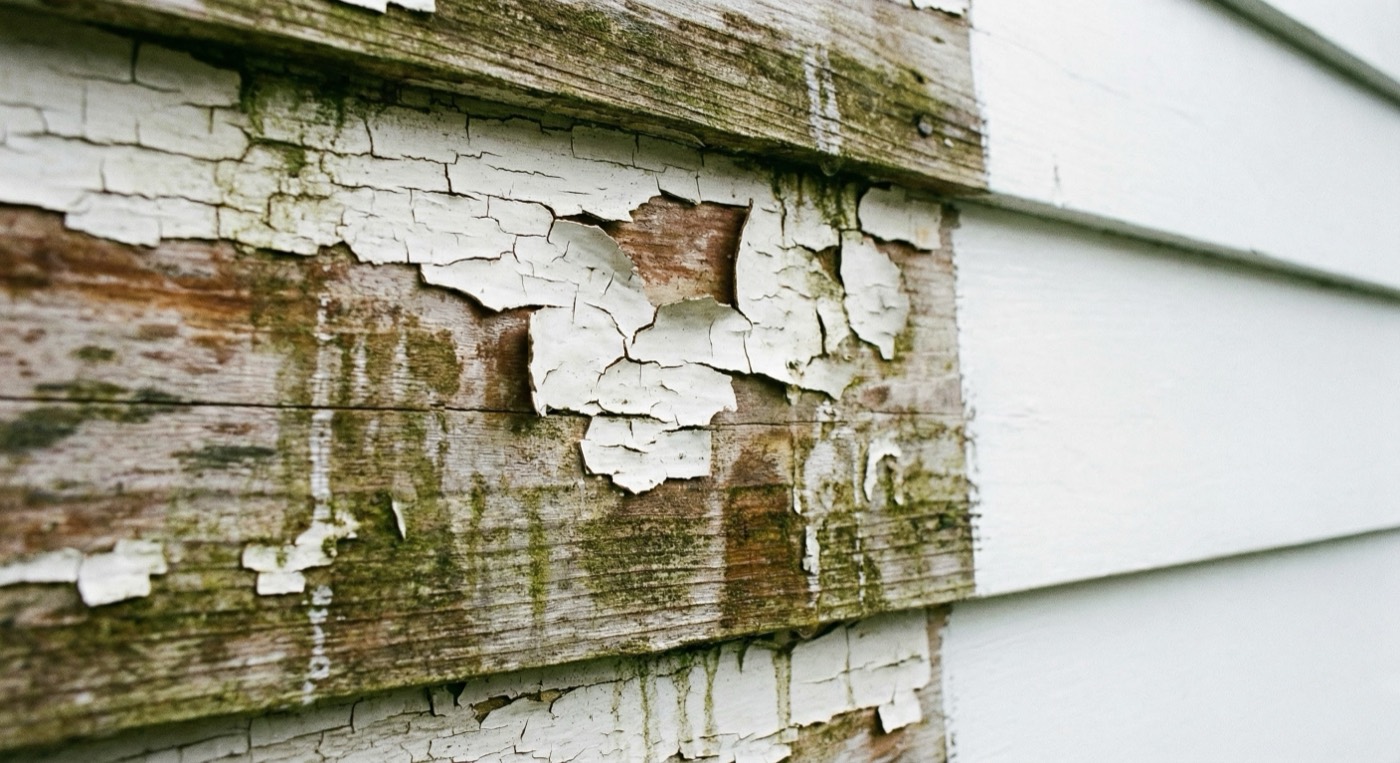
Exterior paint is your home's first line of defense against the elements. In the Pacific Northwest — where rain falls for eight months of the year, humidity is constant, and UV exposure in summer is stronger than most people expect — exterior paint works harder than it does in almost any other climate in the country. Knowing when to repaint isn't just about aesthetics. It's about protecting your home.
General Guidelines by Surface Type
How long exterior paint lasts depends heavily on the surface it's applied to and the quality of the original application. Here are typical repaint intervals for the PNW:
Wood siding: 5–7 years. Wood is the most demanding surface — it expands and contracts with moisture and temperature, which stresses the paint film over time.
Cement fiber board (Hardie plank): 8–12 years. More dimensionally stable than wood, cement board holds paint well when properly primed and painted with quality materials.
Stucco: 5–8 years. Stucco is porous and absorbs moisture, which can cause paint to fail from the inside out if not properly sealed.
Trim and doors: 4–6 years. High-touch, high-UV surfaces that show wear faster than walls.
How the Pacific Northwest Accelerates Wear
The PNW's combination of wet winters and bright summers is particularly hard on exterior paint. Moisture gets into micro-cracks in the paint film during rainy months and then expands during summer heat, causing peeling and blistering. Mold and mildew are perennial problems on north-facing and shaded surfaces. And while Seattle gets less sun than you might think annually, the UV intensity when the sun does appear is significant at our latitude.
This is why paint quality and surface prep matter so much here. A cheap paint job in the PNW doesn't last five years. It barely lasts three. A properly prepared surface with premium paint applied in the right conditions will comfortably hit eight to ten years.
Warning Signs It's Time to Repaint
Peeling or bubbling: Paint is no longer adhering to the surface. Moisture has likely gotten underneath. Address this promptly to prevent wood damage.
Chalking: Run your finger along the surface. A white chalky residue means the paint's binders have broken down and the paint is no longer protecting the surface.
Fading: Significant color loss, especially on south and west-facing surfaces, means UV has degraded the paint film.
Cracking: Fine cracking (sometimes called alligatoring) means the paint has lost flexibility and can no longer move with the substrate.
Mold or mildew: Dark staining on exterior surfaces, especially on north-facing walls, needs to be addressed with proper cleaning and paint designed to resist biological growth.
How to Extend the Life of Your Exterior Paint
The best thing you can do between repaints is keep gutters clean so water doesn't overflow onto siding, trim back vegetation that holds moisture against the house, and do a quick visual inspection each spring. Catching a small patch of peeling paint and addressing it early prevents a much larger repaint down the road.
If you're not sure whether it's time to repaint, Vasy Painting offers exterior inspections for Seattle and Bellevue homeowners. We'll give you an honest assessment — and if it's not time yet, we'll tell you that too. Reach out to schedule a look.